
Washed Stone Market Share | Niche Industry Status & Trends 2026
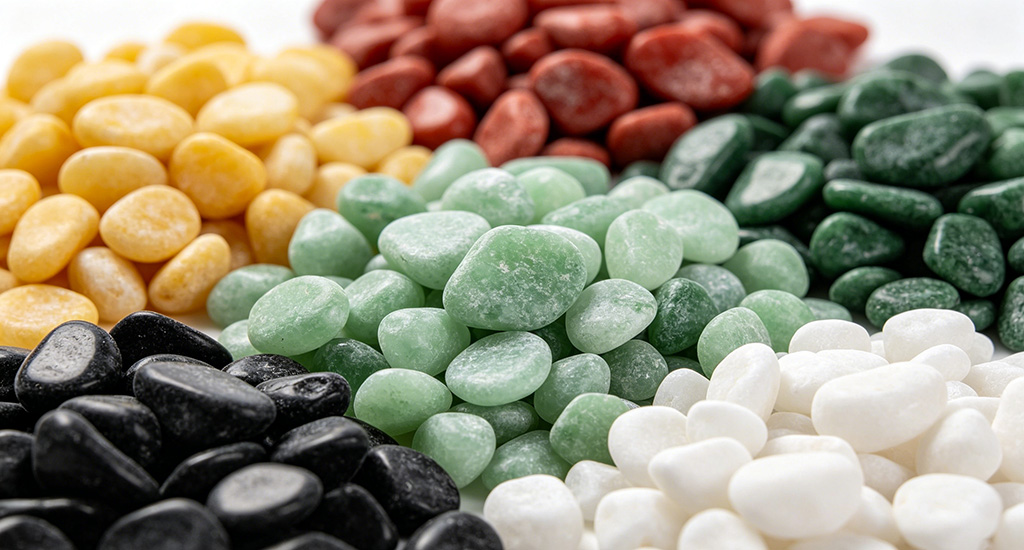
Why Washed Stone Has a Small Market Share? Niche Industry Status & Future Trends 2026
Most stone industry practitioners, engineering purchasers, and landscape designers have noticed a common phenomenon: large wholesale stone markets barely have dedicated zones or spot supplies for washed stone. Few merchants sell it, and it has extremely low offline exposure.
This leads most people to assume that washed stone is a minor auxiliary material in the stone industry with a small market volume and limited demand.
This perception ishalf correct and half misleading.
The real industry situation is as follows: Washed stone occupies a very low share in the traditional slab stone track, yet it is a high-growth, rigid-demand mainstream material for permeable paving, landscape flooring, resin-bound projects, and foreign trade aggregate supply.
This article comprehensively analyzes the true market position of the washed stone industry from five dimensions: actual market share, industrial structure, channel differences, competitive landscape, and future growth trends. It answers core industry questions: Why is washed stone rarely seen in stone markets? Does washed stone have reliable market prospects?
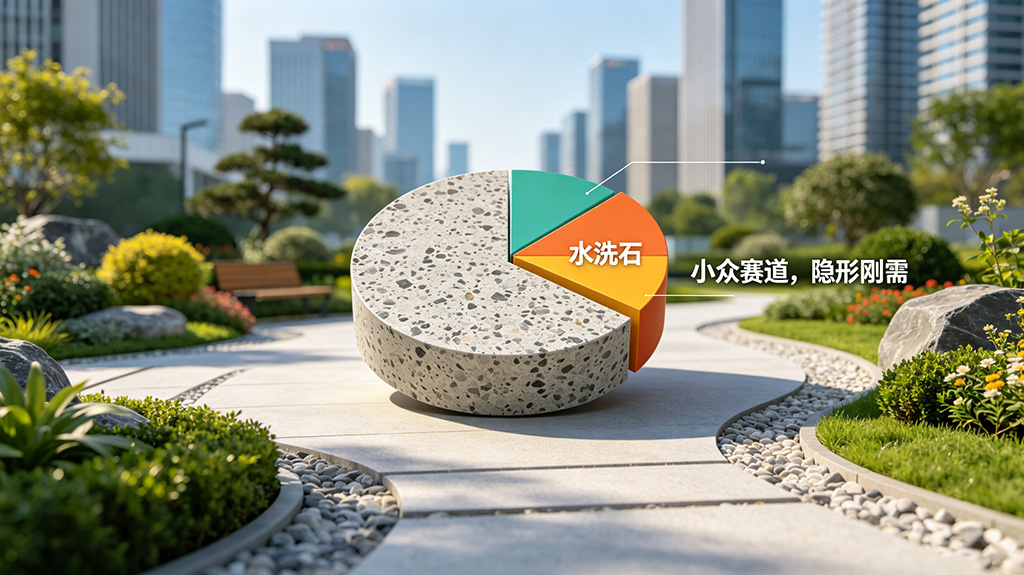
1. Industry Fact: Washed Stone Is Truly a Niche Product in the Traditional Stone Market
1.1 Huge Market Volume Gap
The traditional Chinese stone industry (including granite and marble slabs, engineered stones, special-shaped stones, and tomb stones) is a trillion-level mainstream market. It covers full scenarios such as building exterior walls, interior decoration, municipal engineering, and residential renovation, with mature channels and widespread wholesale markets nationwide.
In contrast, the decorative aggregate and permeable flooring segment where washed stone belongs is only a billions-level niche market.
Direct data comparison:
Traditional stone overall market share: over 95%
Washed stone overall market share: less than 5%
This is the core reason why major stone markets rarely stock, display, or promote washed stone: small market volume, low single order value, and exclusion from the traditional stone circulation system.
1.2 Product Attributes Do Not Match Traditional Stone Circulation
Traditional stone markets mainly tradelarge slabs and finished stone panels, applied for cutting, dry-hanging, and wall/floor paving projects.
Washed stone is sold as graded granular aggregate (3-6mm, 6-9mm), categorized as flooring paving raw material, landscape filling aggregate, and industrial filter material.
In short: Traditional stone sells finished panels, while washed stone sells granular raw materials. The two tracks are completely different, resulting in almost no mainstream display of washed stone in traditional stone markets.
2. Three Core Reasons Why Washed Stone Is Rare in Stone Markets
2.1 Completely Separated Sales Channels (Most Critical)
Core channels of traditional stone: stone market stores, home decoration companies, customized interior design, and construction decoration teams.
Core channels of washed stone: landscape engineering companies, flooring contractors, resin-bound manufacturers, municipal sponge city projects, and foreign trade bulk procurement.
The two channel systems have almost no overlap. Traditional stone wholesalers do not stock granular aggregates, and landscape & flooring suppliers rarely settle in traditional stone markets, forming a stable industry barrier.
2.2 Engineering-Oriented Application, Almost No Retail Demand
Marble and granite are widely used in residential and commercial decoration with strong retail demand. Washed stone, however, hardly serves retail home decoration and focuses entirely on outdoor engineering scenarios:
Municipal permeable walkways and square paving
High-end residential landscapes, courtyard decoration, and pool surrounds
Cultural tourism scenic spots, park dry creek landscaping, and greening decoration
Resin-bound permeable flooring and exposed aggregate pavement projects
Export landscape aggregates and water treatment filter materials
Ordinary consumers rarely purchase washed stone, so offline retail display is unnecessary.
2.3 Mismatched Inventory and Display Costs
Stone markets are designed for flat, neat, and high-value slab displays. Washed stone is loose graded granular material, prone to dirt, mixed particle sizes, high display difficulty, and large loss.
Displaying washed stone in stone stores brings no profits but increases warehousing and cleaning costs, so 99% of traditional stone merchants refuse to operate it.
3. Niche but Rigid Demand: High Market Share in Segmented Tracks
The misunderstanding that "washed stone has no market" comes from wrong market positioning. It is tiny compared with the trillion-yuan traditional stone market, but it is a mainstream material inpermeable paving and landscape flooring segments.
3.1 Over 30% Market Share in Permeable Paving Industry
Among mainstream sponge city paving materials (permeable concrete, permeable bricks, washed stone, resin-bound stone):
Permeable concrete: 38% market share
Washed stone / resin-bound aggregate: 29% market share
Ordinary permeable bricks and ecological bricks: remaining market share
Benefiting from superior natural texture, strong weather resistance, fade resistance, and high-end compatibility, washed stone continuously replaces traditional paving materials and becomes the priority choice for high-end municipal, villa, and cultural tourism projects.
3.2 Irreplaceable in Landscape Decoration
Natural colored washed stone has no substitutes for zen dry landscapes, dry creek layouts, tree pit paving, pool edging, and garden paths. Traditional stone slabs cannot create natural granular paving effects, building exclusive rigid market demand for washed stone.
3.3 Huge Increment in Foreign Trade Export
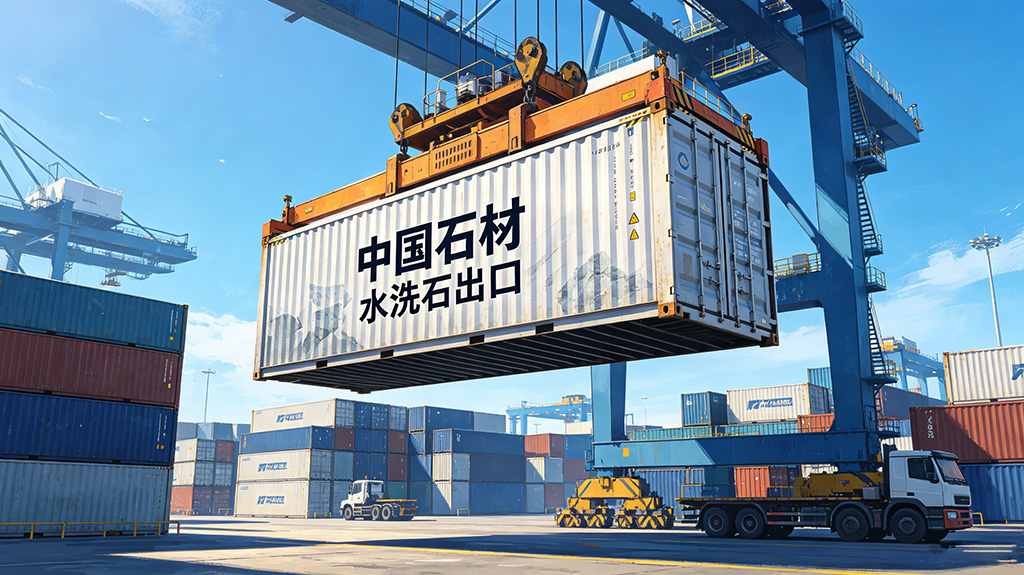
Traditional stone slab export markets face fierce homogenized competition, while colored washed stone and natural landscape gravel belong to blue-chip foreign trade categories. Overseas clients from Europe, America, Southeast Asia, and the Middle East massively purchase Chinese yellow gravel, red gravel, green limestone, black and white washed stone for landscape paving and resin-bound projects, with steadily rising export shares year by year.
4. Washed Stone Industry Competition Pattern: Low Concentration & Huge Headroom for Leading Brands
The washed stone industry is currently in a state of niche blue ocean, rapid development, and no absolute market giants:
Dominant market players are small and medium-sized processing factories and traders, with few large-scale standardized brands
Extremely low market concentration and no national monopolistic enterprises
Core competitive barriers: mine resources, color stability, low mud content control, batch standardization, and export-grade quality control
Compared with the fierce price competition in the traditional stone industry, the washed stone track features lower competition, stable profits, and sustainable growth potential. In particular, Guangxi characteristic colored washed stone (yellow gravel, red gravel, green limestone) boasts exclusive regional mineral resources with strong differentiated advantages.
5. Washed Stone Industry Trends 2026-2030: Steady Expansion of Niche Track
5.1 Continuous Policy Support for Sponge City Construction
Nationwide urban renewal, old community renovation, and municipal permeable pavement projects continue to advance. Permeable paving has become a mandatory construction standard, driving steady growth in demand for high-end washed stone materials.
5.2 Landscape Aesthetic Upgrade Accelerates Low-End Material Replacement
Traditional municipal and residential projects widely adopted ordinary permeable bricks in the past. Currently, high-end projects fully upgrade to natural washed stone and resin-bound paving, which comprehensively surpass traditional materials in appearance, durability, anti-slip performance, and water permeability, bringing huge market replacement space.
5.3 Foreign Trade Export Becomes Core Growth Driver
Overseas landscape paving market maintains strong demand. Chinese natural colored washed stone leads globally in cost performance and product diversity. Full-container export orders increase year by year, becoming a new growth engine for the industry.
5.4 Refined Standardization Becomes New Industry Threshold
The industry will gradually eliminate low-grade weathered stone, mixed materials, and high-mud aggregates. High-hardness, low-mud, color-unified, batch-stable premium washed stone will dominate high-end engineering and export markets.
6. Conclusion: Washed Stone Has Sufficient Market Demand, Just in a Different Track
In one sentence: The small market share and low offline exposure of washed stone in traditional stone markets are determined by track attributes, rather than insufficient market demand.
It does not belong to the traditional slab stone circulation system, focuses no retail home decoration business, and relies no on stone market offline distribution. However, it is a high-demand, high-growth, high-premium quality material in four core tracks: municipal permeable construction, high-end landscape engineering, outdoor flooring projects, and foreign trade aggregate export.
For industry practitioners, there is no need to follow the fierce competition in the traditional stone market. By deeply cultivating the washed stone niche track, controlling source mine quality, and focusing on engineering and foreign trade channels, you can seize stable market shares in this high-value blue ocean segment.