
Multi‑color Exposed‑aggregate Washed‑stone Aggregate Ratio Scheme
Multi‑color Exposed‑aggregate Washed‑stone Aggregate Ratio Scheme
A Complete Color‑matching Guide for Courtyards, Exterior Walls and Landscape Pavements
Nowadays, landscape projects, private courtyards and popular‑style exterior‑wall washed‑stone surfaces are no longer limited to single‑color paving. Multi‑tone blended washed‑stone has become the top‑choice material for high‑end landscape works thanks to its layered texture, premium‑grade visual effect and exclusive appearance.
Yet many on‑site construction failures, cheap‑looking finishes, messy color mixing and muddy‑toned surfaces stem from one common cause: random color blending without standardized proportion settings.
Successful multi‑colored washed‑stone surfaces rely on clear primary‑and‑secondary color ratios, matched light‑and‑shade shades and consistent grain sizes. This guide collects practical, fool‑proof aggregate‑mixing formulas suitable for courtyard pavements, facade cladding, permeable flooring and homestay‑style decorations. It serves as a handy reference for construction workers, bulk buyers and landscape designers.
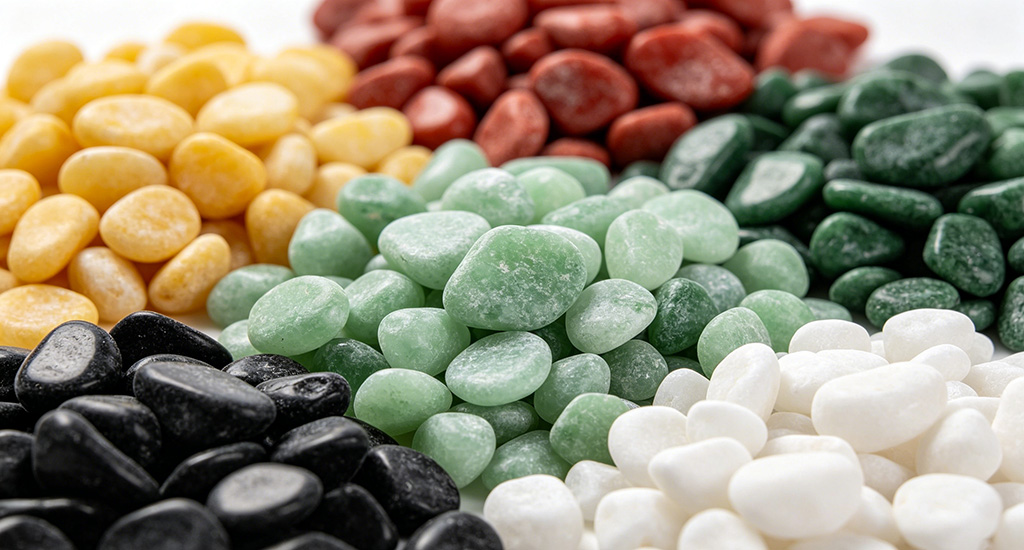
Core Principles for Blending Multi‑color Washed‑stone Aggregates
Every attractive mixed‑color exposed‑aggregate surface follows three basic rules to avoid most common‑site mistakes.
1.Clear priority among colors
The dominant color accounts for 60%‑80% to establish the overall tone. Secondary colors take up 20%‑40% for subtle decoration. Accent hues shall never overpower the main visual effect and chaotic‑looking results should be avoided.
2.Uniform grain size
All blended stones must feature identical particle sizes, such as 3‑5 mm or 5‑8 mm. Consistent dimensions guarantee even mixing and prevent particle stratification and uneven color patches.
3.Proper contrast between light and dark shades
Pair dark‑toned base stones with light‑colored highlights or light backgrounds with dark embellishments. Never combine aggregates with similar brightness, or the finished surface will look dull and flat without depth.
Four Practical Ready‑to‑use Mix‑ratio Solutions
Scheme 1: Elegant Grey‑toned Combination (Ideal for Public‑works and Villa Projects)
Applicable scenarios: residential walking paths, municipal permeable pavements, villa courtyards, building exteriors and minimalist‑style landscapes
Color combination: light‑grey washed‑stone + dark‑grey washed‑stone + a small quantity of pure‑white pebbles
Exact proportion: 70% light grey + 25% dark grey + 5% pure white
This palette delivers delicate grey layers with a neat, understated premium look. It is highly stain‑resistant and will not turn yellow or fade under long‑term outdoor sunlight exposure, ranking as the most‑used low‑rework formula for engineering projects.
Scheme 2: Warm Beige Blend (Homestays and Private Courtyard Trend Option)
Applicable scenarios: private courtyards, homestay floors, balcony surfaces, indoor exposed‑aggregate finishes and wabi‑sabi‑style landscapes
Color combination: beige washed‑stone + light‑grey aggregate + tiny black stone chips
Exact proportion:75% beige +20% light grey +5% black
Soft warm shades create a relaxing natural‑style atmosphere well‑matched with log‑style, wabi‑sabi and light‑luxury decorations. Minimal black grains add weight to the overall tone and stop the surface from looking washed‑out.
Scheme 3: Sophisticated Black‑and‑grey Formula (Premium Entrance and Commercial Landscapes)
Applicable scenarios: building exterior walls, gateway pavements, sales‑display zones and high‑end club landscapes
Color combination: pure black washed‑stone + dark‑grey aggregate + off‑white accent stones
Exact proportion:65% black +30% dark grey +5% off‑white
Deep, steady‑toned visuals bring strong recognition and a tough, high‑end texture. Smooth shade transitions prevent depressing monochrome black surfaces, perfectly suited for commercial and high‑rise outdoor decoration.
Scheme 4: Soft Natural Multicolor Mixture (Parks and Ecological Scenic Spots)
Applicable scenarios: urban parks, ecological gardens, country‑side trails and permeable public squares
Color combination: beige, light grey, ivory‑white and trace dark‑red gravel
Exact proportion:45% beige +35% light grey +15% ivory white +5% dark‑red stones
Rich yet non‑chaotic colors fit natural‑themed outdoor environments. The lively and gentle visual style enjoys wide public acceptance.
Ratio Adjustment Tips for Different Application Settings
1.Outdoor pavements (courtyards, trails, public squares)
Prioritize dark‑toned base aggregates and light‑colored decorations. Higher ratios of dark grey and black stones improve stain resistance against dust and fallen leaves.
2.Building exterior facades
Select light‑toned main stones with dark‑color embellishments. Pale beige and light grey deliver clean long‑distance visuals and avoid heavy‑looking building exteriors.
3.Indoor floors, balcony and residential decoration
Stick to low‑saturation warm‑toned mixes. Reduce high‑contrast dark aggregates and choose beige, light‑grey and ivory stones for cozy home‑style environments.
Critical Rule: Keep Uniform Particle Sizes
Uneven grain sizes frequently lead to layered grains and patchy colors even with correct color ratios.
Courtyard roads and permeable ground: 3‑5 mm or 5‑8‑mm aggregates
Delicate exterior‑wall finishes: 2‑4 mm or 3‑5‑mm stones
Large‑scale municipal squares: 5‑8‑mm washed‑stone
Aggregate of every shade needs identical roundness and cleanliness, or uneven texture and localized discoloration will appear and prove impossible to repair afterwards.
Three Severe Mistakes to Avoid During Color Matching
Equal‑proportioned color blending
Evenly divided multi‑color combinations lack primary shades and tend to look messy and cheap.
Large‑share bright saturated colors
Wide‑range vivid hues produce tacky, harsh‑looking surfaces inconsistent with contemporary landscape aesthetics.
Over‑used accent colors
Accent stones exceeding 10% of total weight break tonal balance and create jarring scattered spots.
Universal Mix‑ratio Formula for Quick Reference
Dominant‑color 60%‑80% + secondary‑shade 20%‑35% + decorative accent 3%‑5%
Follow this flexible formula and the four classic matching schemes above. You can create neat, sophisticated multi‑color washed‑stone finishes for courtyards, outer walls, municipal projects and home decorations, compatible with minimalist, wabi‑sabi and natural‑style landscape designs.