
Core Applications of Terrazzo (Cast-in-Place Terrazzo + Prefabricated Terrazzo Slabs) - Guide to Selection and Adaptation of Stone Aggregates
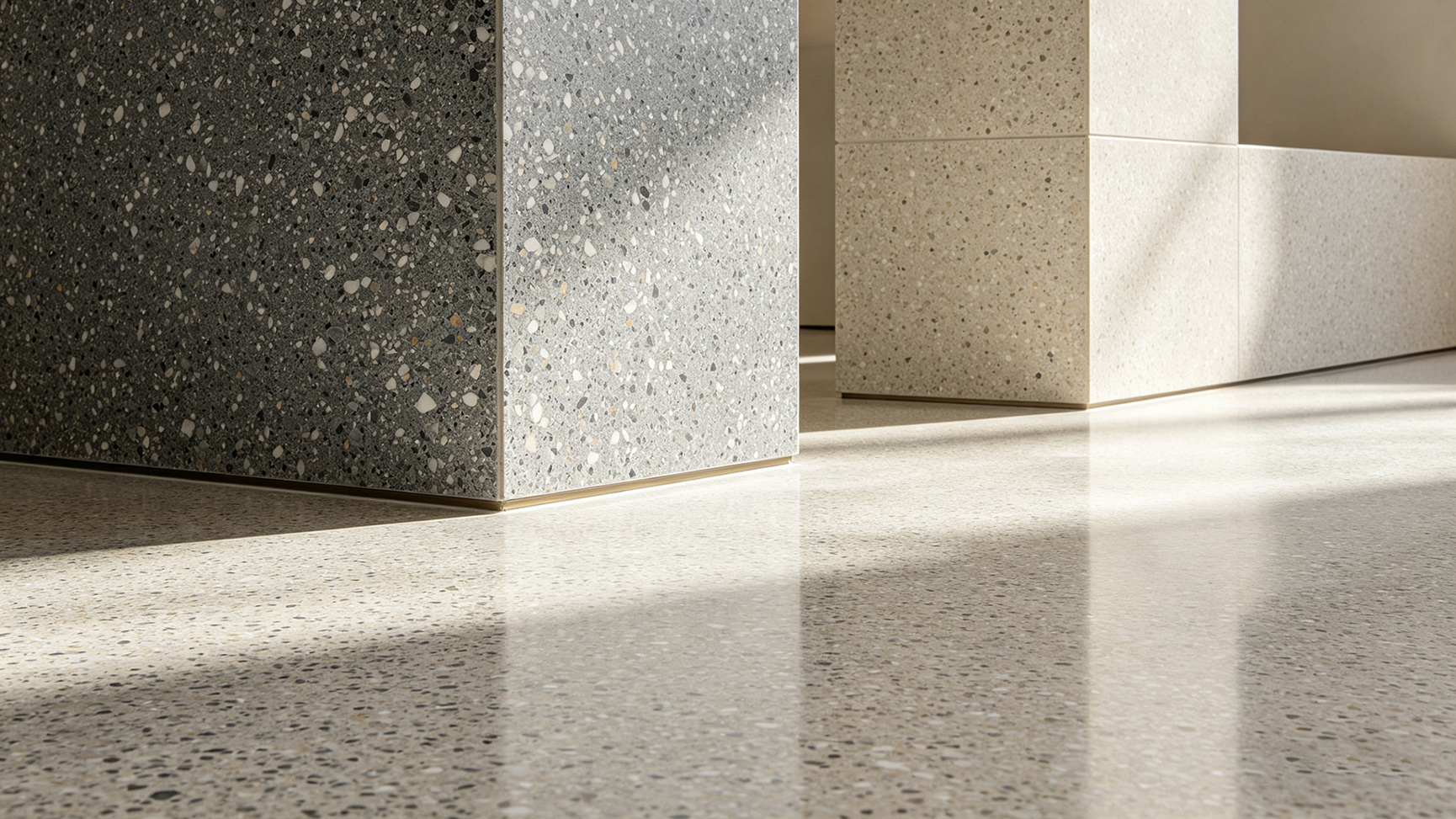
Core Applications of Terrazzo (Cast-in-Place Terrazzo + Prefabricated Terrazzo Slabs) - Guide to Selection and Adaptation of Stone Aggregates
I. Core Role of Stone Aggregates in Terrazzo (Irreplaceable)
Durability Enhancement: High-quality stone aggregates possess high hardness (Mohs hardness ≥ 6) and excellent wear resistance, which can significantly improve the impact resistance and wear resistance of terrazzo floors and walls, extend the service life of terrazzo, and adapt to high-traffic and high-abrasion scenarios (e.g., airports, subway stations, and shopping malls).
Aesthetic and Textural Shaping: The color, particle size, and shape of stone aggregates directly determine the visual effect of terrazzo—solid-color stones create a minimalist and high-end texture, colored stones enable the creation of personalized mosaics, and irregular stones highlight natural textures, making them suitable for overseas projects of various styles (minimalist, retro, and light luxury).
Functional Guarantee: Reasonable matching of stone aggregate particle sizes can enhance the slip resistance and water permeability of terrazzo (suitable for outdoor scenarios); special stone aggregates (e.g., antibacterial stones) can endow terrazzo with antibacterial properties, making it applicable to special scenarios such as medical care and education.
Comprehensive Cost Reduction: High-quality stone aggregates exhibit strong stability, are not prone to weathering or fading, and can reduce the long-term maintenance and rework costs of terrazzo. Additionally, they are compatible with the production and construction processes of both cast-in-place terrazzo and prefabricated terrazzo slabs, improving construction efficiency and indirectly reducing the procurement and implementation costs of overseas projects.
II. Application Scenarios of Cast-in-Place Terrazzo and Stone Aggregate Adaptation Techniques
Overseas Large-Scale Public Buildings (Airports, Subway Stations, Convention and Exhibition Centers): These scenarios are characterized by high passenger flow and high wear. Priority should be given to natural stone aggregates with high hardness and strong wear resistance (e.g., quartz stone and basalt stone), with a particle size of 2-5mm, mainly in dark gray and black, supplemented by a small amount of light-colored stones for decoration. These aggregates are not only wear-resistant and slip-resistant but also easy to clean, meeting the long-term use requirements of high-traffic scenarios.
Overseas High-End Commercial Spaces (Hotel Lobbies, Shopping Mall Atriums): Emphasizing aesthetics and design sense, colored stone aggregates (e.g., colored quartz sand and colored basalt) can be selected, with a particle size combination of 1-3mm + 3-5mm. Through mosaics composed of stones of different colors and particle sizes, brand logos and geometric patterns can be created to enhance the high-end sense of the space. Resin is selected as the binder, which, when combined with stone aggregates, can achieve a mirror polishing effect, meeting high-end commercial positioning requirements.
Overseas Industrial Plants and Logistics Warehouses: Focusing on functionality, stone aggregates with compression resistance, oil resistance, and easy cleanability (e.g., granite stones) are selected, with a particle size of 5-8mm and dark, stain-resistant colors. Antistatic stone aggregates can be added to meet the special needs of industrial scenarios, and the high strength of the stone aggregates can withstand the rolling of heavy equipment in the plant.
Overseas Old Building Renovation Projects: To align with the original texture of the building, natural stone aggregates similar to the texture of the original floor (e.g., natural pebbles and light gray quartz stones) are selected, with a particle size of 2-4mm, retaining the natural weathered texture without excessive processing. These aggregates can not only integrate with the old building but also improve the durability of the floor through their high quality.
III. Application Scenarios of Prefabricated Terrazzo Slabs and Stone Aggregate Adaptation Techniques
Overseas Chain Businesses (Cafes, Convenience Stores, Brand Stores): These scenarios require batch replication and rapid construction. Stone aggregates with uniform particle size (1-3mm) are selected, mainly in solid and light colors (off-white, light gray). The stone aggregates are uniformly mixed with the binder to ensure consistent color and texture across each prefabricated slab, meeting the unified image requirements of chain brands. Meanwhile, high-quality stone aggregates ensure the wear resistance of the prefabricated slabs to cope with daily passenger flow abrasion.
Overseas High-End Residences and Hardcover Apartments (Living and Dining Rooms, Kitchens and Bathrooms, Staircases): Emphasizing environmental protection and aesthetics, natural stone aggregates with no radiation and environmental friendliness (e.g., quartz stone and marble stones) are selected, with a particle size of 1-2mm. Metal stone aggregates (copper particles, gold foil stones) can be incorporated to create a light luxury texture. For kitchen and bathroom areas, stone aggregates with strong water resistance are selected, combined with resin binders to prevent moisture absorption and discoloration, meeting the long-term use requirements of residences.
Overseas Medical and Educational Institutions (Hospital Wards, School Classrooms): Focusing on antibacterial properties, slip resistance, and easy cleanability, stone aggregates treated with antibacterial processes (e.g., antibacterial quartz stones) are selected, with a particle size of 2-3mm, a rough surface, and a dry slip resistance value ≥ 4.0. The stone aggregates have no sharp edges or corners to avoid collisions, and they are easy to clean and non-porous, preventing bacterial growth and meeting high hygiene standards.
Overseas Outdoor Landscapes (Park Benches, Commercial Block Signs, Tree Pit Edges): These scenarios require weather resistance and anti-aging properties. Stone aggregates with UV resistance and resistance to weathering (e.g., basalt and quartz stone) are selected, with a particle size of 3-5mm and dark, sun-resistant colors. Thin, bendable prefabricated slabs combined with stone aggregates balance durability and artistry, adapting to the outdoor environment exposed to wind and sunlight.
IV. Core Considerations for Overseas Procurement of Stone Aggregates for Terrazzo
Quality Standards: Priority should be given to purchasing stone aggregates with a Mohs hardness of ≥ 6, water absorption of ≤ 0.5%, no impurities, and no weathering to ensure wear resistance and stability. For stone aggregates used in prefabricated terrazzo slabs, uniform particle size and consistent color must be guaranteed, with an error controlled within ±0.5mm to avoid affecting the appearance and quality of the prefabricated slabs.
Adaptability: The particle size and color of stone aggregates should be selected according to the terrazzo application scenario—large particle size and high hardness stones for high-traffic scenarios, colored and small particle size stones for high-end scenarios, and weather-resistant stones for outdoor scenarios. Improper selection should be avoided to prevent substandard terrazzo quality.
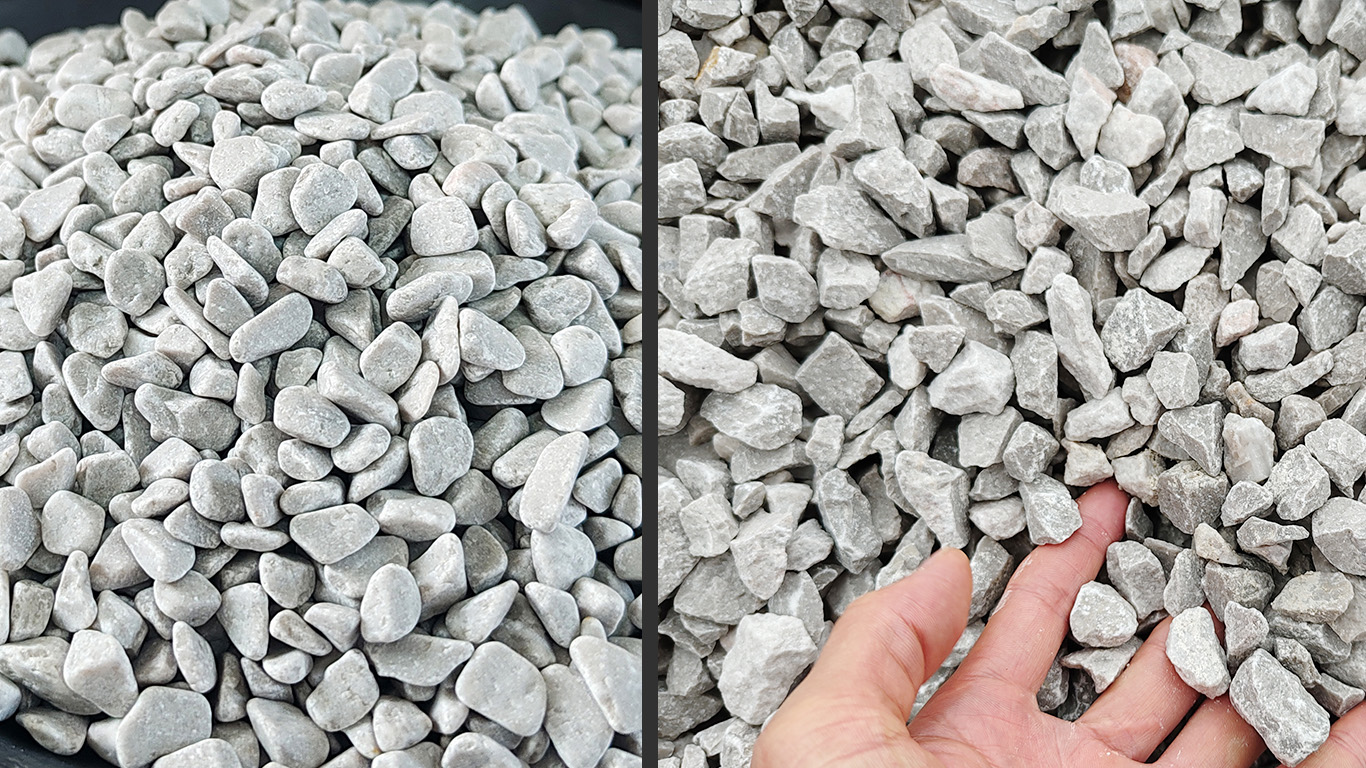
Particle Shape: Two types of particles are available for selection: sharp-angled particles, which are directly crushed, sieved, and cleaned without polishing, and are relatively cost-effective; and rounded particles, which are processed from sharp-angled materials to form rounded edges, presenting a smooth appearance. Rounded particles are relatively more expensive (approximately twice the cost) and are also used as aggregates for washed stone. The selection between the two depends on design requirements and cost budgets.
Transportation and Packaging: Stone aggregates should be packaged in double-layer sealed woven bags, each weighing 25-50kg, fixed with wooden pallets on the outside, and subjected to moisture-proof and wear-proof treatments to adapt to long-distance sea transportation. When purchasing in bulk, suppliers may be required to provide quality inspection reports of stone aggregates to ensure compliance with international standards.
Supplier Selection: Priority should be given to integrated suppliers offering "stone aggregates + terrazzo processing + export" services. Such suppliers can ensure the adaptability of stone aggregates and terrazzo, reduce intermediate links, and lower procurement costs. Attention should also be paid to the supplier's after-sales policy, such as free replenishment and replacement services in the event of issues such as color difference or excessive impurities in the stone aggregates.
