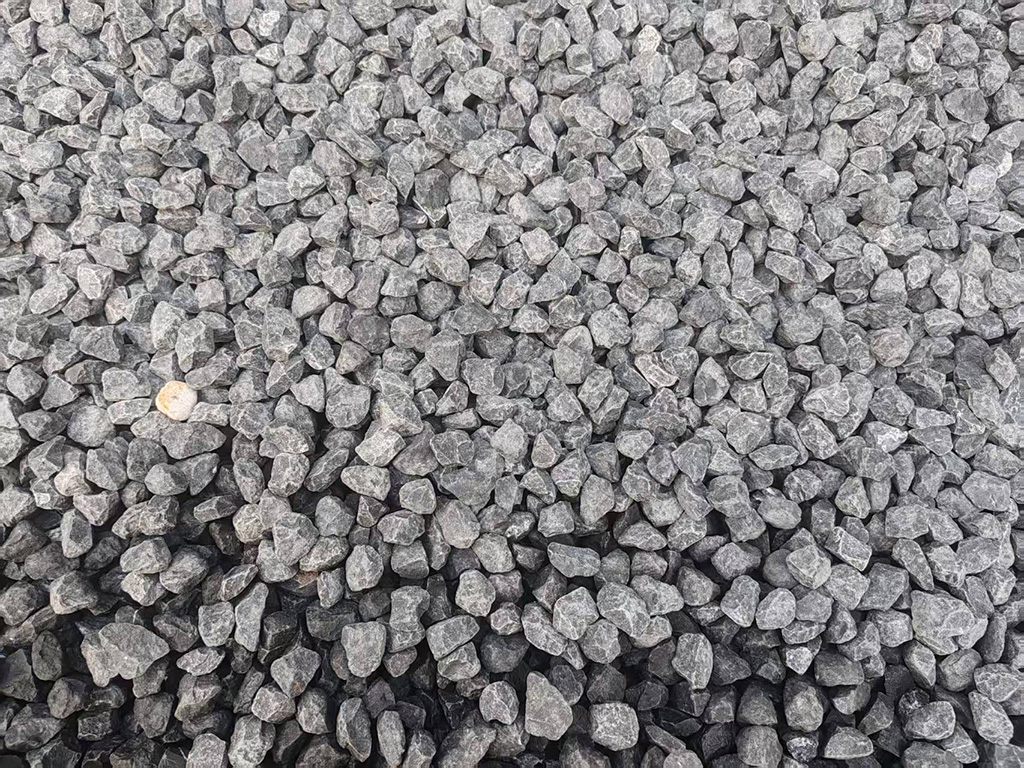
Same Black Crushed Stone, Huge Difference: Needle-Flake vs Cubic Particles
Same Black Crushed Stone, Huge Difference: Needle-Flake vs Cubic Particles
Most buyers assume that all black crushed stone is the same. In reality, black crushed stone is divided into two completely different categories based on particle shape: needle-flake particles and regular cubic particles.
Despite their similar appearance, these two types vary significantly in production technology, structural stability, compression resistance, construction performance, service life, and overall cost. Understanding their differences is essential for accurate project selection, quality control, and budget optimization.
1. Needle-Flake Black Crushed Stone — Cost-Effective for Hidden Works
Needle-flake crushed stone features irregular, elongated, and flat particles. It is produced through basic primary crushing with simple processing. Its biggest advantage ishigh voidage and excellent drainage performance.
This type of stone is not low-quality material; it is specially suitable for non-visible infrastructure projects that require high water permeability and cost efficiency.
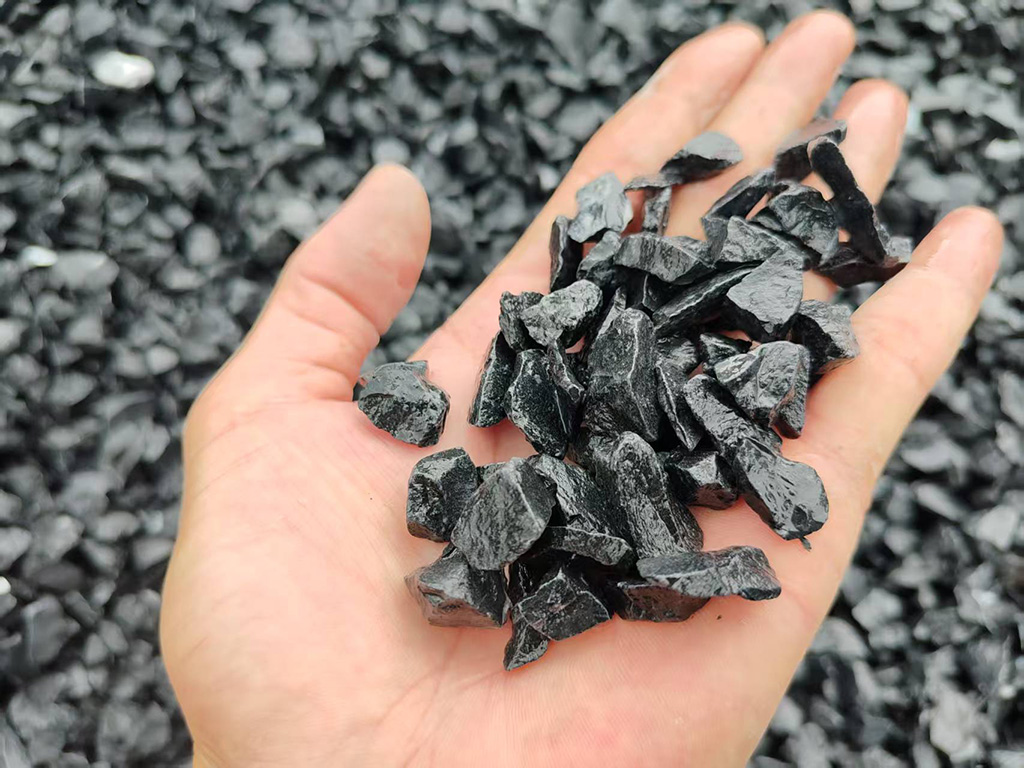
Common Applications
Road base and subgrade filling
Foundation pit bedding and backfilling
Blind ditch drainage and rainwater garden filtration
Limitations
Needle-flake particles break easily under heavy load. They cannot provide stable compaction density. Therefore, they are not suitable for high-strength concrete, load-bearing pavement, glued stone flooring, or high-end landscape paving. Long-term use may cause settlement
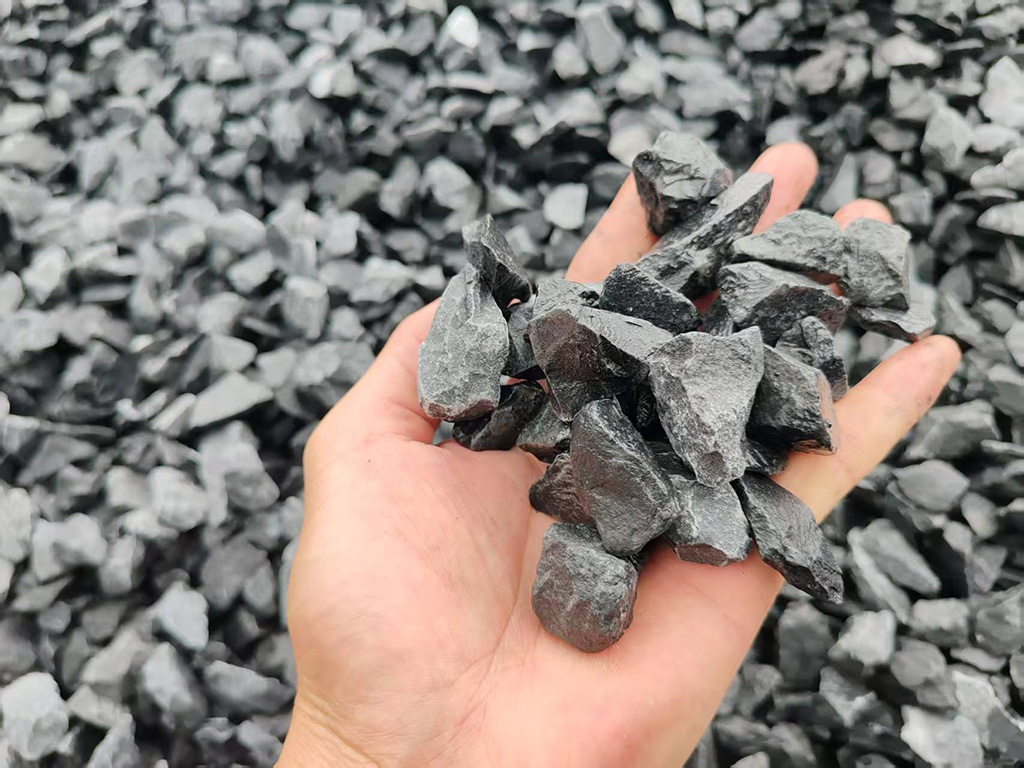
2. Regular Cubic Black Crushed Stone — High Strength & Premium Landscape Grade
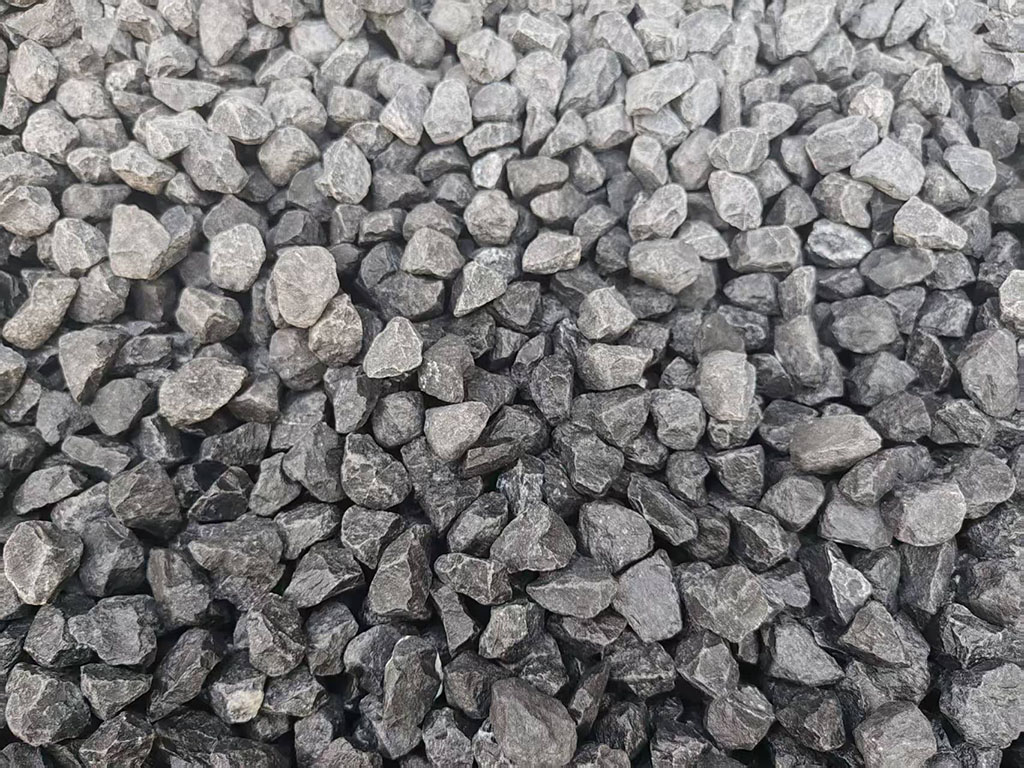
Cubic crushed stone consists of full, rounded, regular polyhedral particles with no slender or flat shapes. Although it can be produced directly by professional shaping crushers, it requires strict screening, repeated shaping, and precise grain control.
Cubic particles offer uniform force distribution, strong compression resistance, high wear resistance, and superior weather durability. It is the premium choice for structural construction and high-grade landscape projects.
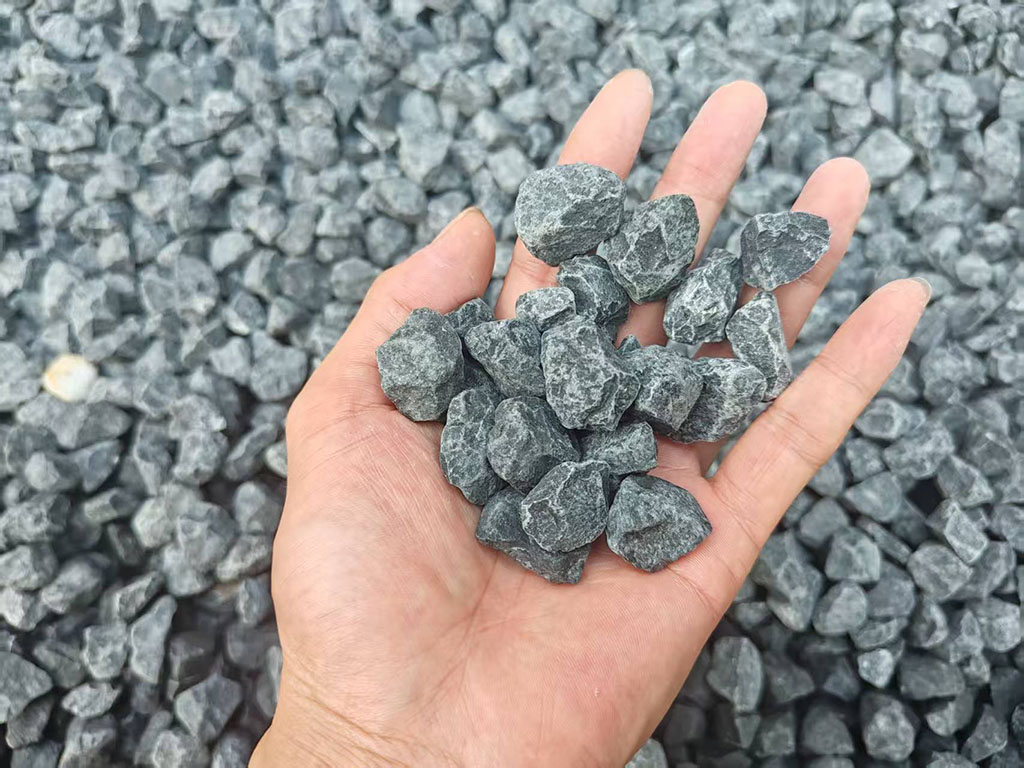
Common Applications
High-strength concrete aggregate
Municipal roads, asphalt roads, and parking lot pavement
Permeable flooring, washed stone, and bonded stone decoration
Villa courtyards, dry landscapes, and waterside paving
Heavy-duty industrial ground and high-standard engineering projects
3. Why Cubic Crushed Stone Has a Higher Cost
Many customers wonder: if cubic stone can be crushed directly by professional machines, why is it still more expensive?
The answer lies in equipment differences, production loss rate, and strict quality control:
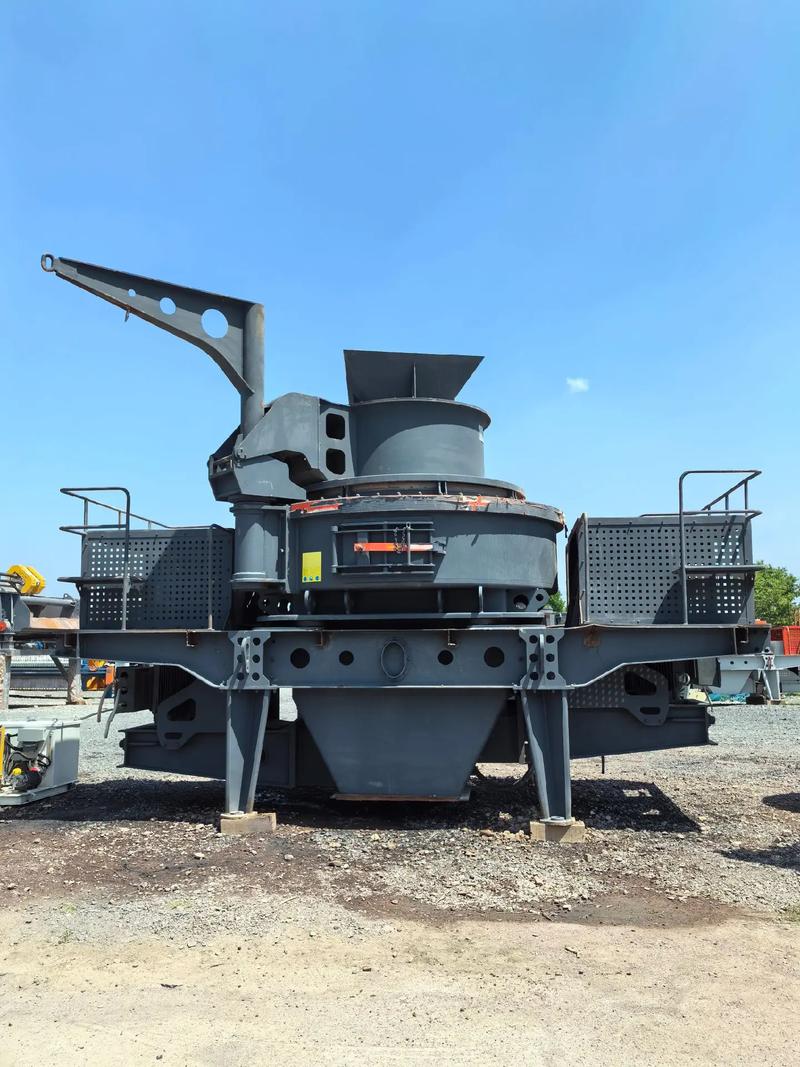
High-end shaping equipment requiredOrdinary needle-flake stone only needs simple crushing machines. Cubic stone requires professional shaping crushers, roller shaping equipment, and vertical shaft impact crushers. These devices consume more power, wear faster, and have higher investment costs.
High production rejection rateEven with advanced shaping machines, natural rock texture always produces irregular particles. A large proportion of needle and flaky grains must be removed during production, resulting inlow finished product yield and high raw material waste.
Multi-screening and washing processCubic stone requires layered precision screening and secondary water washing to remove powder and unqualified particles. This extra process ensures uniform particle shape, high purity, and stable quality.
Lower production capacityShaping production is slower and more refined. Compared with fast, rough crushing, cubic stone cannot be mass-produced at low cost, which naturally increases the market price.
4. How to Choose the Right Black Crushed Stone
For backfilling, drainage, and hidden base works: Choose needle-flake crushed stone for cost-effectiveness.
For load-bearing structures, pavement, and high-end landscape: Choose regular cubic crushed stone for durability, stability, and premium visual effect.
Conclusion
No particle type is absolutely better — each serves its own scenario. The difference in appearance leads to huge gaps in engineering performance and long-term results. Choosing the correct particle shape helps contractors avoid rework, reduce risks, and maximize project value.